
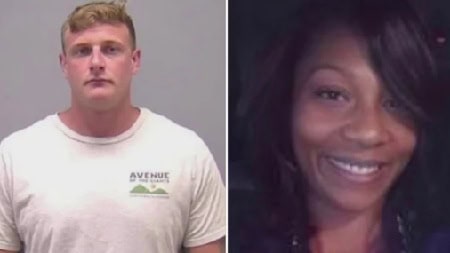
Opening statements were delivered Wednesday morning at the Peoria County Courthouse, marking the official start of the trial for a former Illinois sheriff’s deputy accused of fatally shooting Sonya Massey.
Sean Grayson, 31, is charged in connection with the June 2024 shooting of Massey, a 36-year-old Black mother of two. Massey had called authorities to her Springfield home to report a possible prowler. Grayson, a white former Sangamon County deputy, later wrote in a report that he feared for his safety after Massey, holding a pot of boiling water, said to him, “I rebuke you in the name of Jesus.”
Grayson was terminated from the sheriff’s office nearly two weeks after the incident and subsequently charged with first-degree murder, aggravated battery, and official misconduct. He pleaded not guilty and has remained in custody awaiting trial.
Earlier this week, prosecutors dropped the aggravated battery and misconduct charges without objection from the defense.
Jury selection began Monday, resulting in 12 jurors and 3 alternates being sworn in. Cameras have been barred from the courtroom, with the judge citing concerns that their presence could distract jurors or influence witness behavior.
In his opening statement, Sangamon County State’s Attorney John Milhiser asserted that Grayson unlawfully entered Massey’s home and used deadly force without justification. He emphasized that Massey was not a suspect and criticized Grayson’s failure to activate his body camera immediately upon arrival, calling it part of a broader disregard for department policy and training. Milhiser argued that Grayson acted out of anger, not self-defense.
According to Milhiser, body camera footage shows Massey being “nice and kind” during her interactions with Grayson and his partner. He characterized the incident as “what happens when the defendant gets mad at a woman who is standing in her own kitchen.”
Defense attorney Daniel L. Fultz countered that Grayson’s actions were legally justified, maintaining that the deputy feared for his life at the time of the shooting.
“He believed he would suffer great bodily harm or death,” Fultz said.