
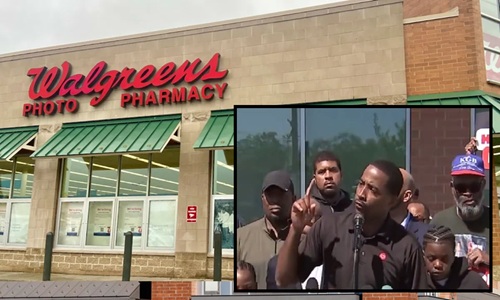
CHICAGO, IL — William Hall is calling for accountability after Walgreens announced plans to close a South Side location, citing persistent shoplifting and safety concerns—sparking outrage from community leaders who say the move could have serious consequences for residents.
Hall, who represents the Chatham neighborhood, criticized the decision, describing the store as a “lifeline” for local residents who depend on nearby access to prescriptions and everyday essentials. He warned that the closure could disproportionately affect seniors and individuals with limited mobility.
“This isn’t just a store closing,” Hall said in remarks reported by local media. “This is about access to healthcare and basic necessities.”
Walgreens has pointed to ongoing retail theft and safety challenges as key reasons behind the shutdown. The company has, in recent years, closed multiple locations in urban areas, citing similar concerns as part of a broader effort to streamline operations and address profitability.
The situation highlights a growing national debate over retail crime and its impact on businesses and communities. While companies argue that theft and security risks make certain locations unsustainable, critics say closures often leave already underserved neighborhoods with fewer essential services.
Hall has pushed back on Walgreens’ reasoning, suggesting that corporations have a responsibility to work with communities rather than withdraw from them.
He has called for greater transparency around the decision and hinted at exploring possible actions to hold the company accountable, though no formal legal charges have been announced.
Community advocates warn that the closure could contribute to the expansion of so-called “pharmacy deserts”—areas where residents must travel long distances to access medications and basic health services.
Public health experts have linked such gaps to poorer health outcomes, particularly among low-income populations.
As the debate continues, residents and local leaders are urging Walgreens to reconsider or provide alternatives to ensure uninterrupted access to care.
For now, the future of the location remains uncertain, but the controversy underscores a broader tension between corporate decision-making and community needs in cities across the United States.
Chicago Alderman William Hall wants to see Walgreens face charges for closing (over a shoplifting crisis) pic.twitter.com/lZgZRvBdJ7
— End Wokeness (@EndWokeness) May 4, 2026
I’m not sure what a business is supposed to do when a location has an inordinate and costly amount of theft/shoplifting. If they lock more of the products up in cabinets that require a store associate’s assistance, they catch flack. If they hire more security and loss prevention people to catch thieves and prosecute them, people are unhappy. If they raise prices to offset losses from theft, they are accused of discriminatory behavior. And finally, if they decide it’s no longer viable financially to do business there, they’re accused of racism and neglect of a community.
That doesn’t even get into any safety concerns raised.
At what point does the community start to take primary responsibility for businesses leaving their area and demand better from those who live there? At what point do we all stop making excuses for thieves? No one is obligated to do business in areas where their workers don’t feel safe and theft is rampant.