
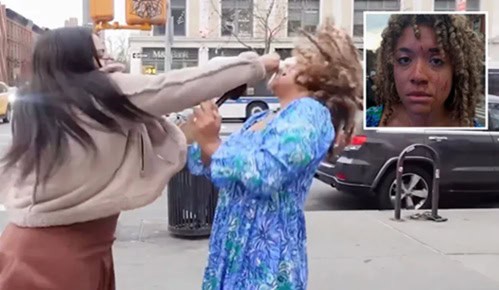
New York City — Savannah Craven Antao, a pro-life journalist affiliated with Live Action, has filed a civil lawsuit following a violent assault during a street interview in Harlem earlier this year.
The criminal case against her alleged attacker was ultimately dropped by the Manhattan District Attorney’s office, citing procedural errors in the handling of the case.
The incident occurred on April 3, 2025, when Antao was conducting a man-on-the-street interview regarding abortion.
According to eyewitness accounts and video footage, a woman named Brianna J. Rivers, who was approached for her opinion, suddenly struck Antao twice in the face.
The blows left Antao bloodied, requiring immediate medical attention and stitches. The shocking video of the encounter quickly circulated online, drawing widespread attention and sparking debate over street journalism and public discourse on sensitive topics.
Initial Criminal Charges
Rivers was arrested shortly after the assault and charged with second-degree assault.
Manhattan prosecutors initially signaled their intent to pursue the case, noting the clear video evidence and eyewitness accounts.
However, in July 2025, the case was dismissed after the DA’s office acknowledged it had missed key discovery-filing deadlines.
The decision provoked frustration from Antao and her legal team, who called the dismissal “unacceptable” and expressed concern over the message it sends regarding accountability for politically motivated violence.
In a statement, Antao said the assault left her not only physically hurt but also worried about her personal safety as a journalist reporting on contentious issues. “I never expected that asking people their opinions on a public street could lead to violence,” she said.
Civil Lawsuit and Allegations
Following the dismissal of criminal charges, Antao filed a civil lawsuit against Rivers, seeking compensation for medical expenses and other damages.
The complaint alleges that Rivers acted “knowingly, willfully, and maliciously” in targeting Antao. It also claims that Rivers engaged in harassment afterward, including the creation of online content mocking the assault, such as t-shirts depicting a fist striking a face.
The lawsuit also raises the possibility that the attack was motivated by Antao’s religious beliefs and pro-life advocacy. Her legal team, representing her through the Thomas More Society, argues that individuals should not face physical violence for exercising their First Amendment rights, including freedom of speech and religion.
Wider Implications
The case has attracted national attention as a symbol of the growing tensions around political and social debates in public spaces. Advocates for journalists and free speech have highlighted the incident as a reminder of the risks reporters face, even in casual, street-level interviews.
Meanwhile, the Manhattan DA’s office has publicly apologized for procedural errors and promised reforms to ensure proper handling of discovery in the future. The office emphasized that the dismissal was not a reflection on the validity of the assault allegations themselves.
Looking Ahead
Antao’s lawsuit represents her attempt to seek accountability and compensation outside the criminal justice system. Observers suggest the civil case could serve as a benchmark for how courts address politically motivated assaults and online harassment.
As Antao continues her work, she has stressed the importance of maintaining public discourse without fear of violence. “We need to be able to discuss challenging topics without someone resorting to fists instead of words,” she said. “This is not just about me—it’s about making sure others are protected when they speak their minds.”
Video Credit News | Live Action