
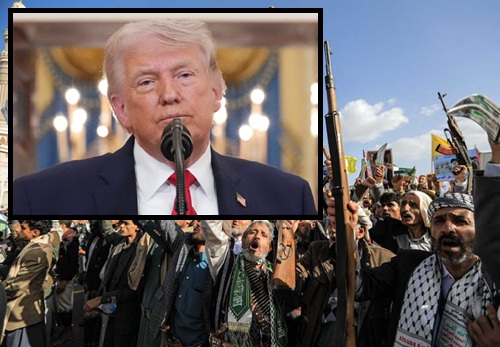
U.S. President Donald Trump announced on Tuesday that he would suspend planned bombing and military attacks on Iran for a period of two weeks, a move tied to Iranian commitments over the strategic Strait of Hormuz, diplomatic officials confirmed.
The announcement came just hours before a previously set deadline for a major U.S. air campaign against Iranian infrastructure, a campaign that had been signaled by the president and his national security team for several days. In a social media post and statements to reporters, Trump described the pause as a “double‑sided ceasefire” and said it was designed to allow negotiators from both sides to engage on a longer‑term peace agreement.
“Based on conversations with Pakistani leaders,” Trump wrote, he had agreed to “suspend the bombing and attack of Iran for a period of two weeks … subject to the Islamic Republic of Iran agreeing to the complete, immediate and safe opening of the Strait of Hormuz.”
The temporary suspension was brokered in part through diplomatic efforts by Pakistan’s Prime Minister Shehbaz Sharif and other regional mediators, who proposed the two‑week truce as a last‑minute off‑ramp from escalating hostilities. Iran, according to intermediaries, agreed in principle to the temporary ceasefire and discussed allowing “conditional passage” through the Strait of Hormuz, a key global oil shipping lane whose closure earlier in the conflict sent energy prices soaring.
Trump’s administration also said it had received a 10‑point peace proposal from Tehran and that many contentious issues had been narrowed, creating “a workable basis” for continued negotiation. The president asserted that U.S. military objectives in the conflict had largely been met and that the two‑week pause could serve as a bridge to a more comprehensive agreement.
The U.S.–Iran conflict — which began with joint U.S. and Israeli military strikes on Iranian targets on February 28, 2026 — rapidly escalated into broader hostilities, with Iran responding through missile and drone attacks on Gulf bases and allied interests. Iran also closed the Strait of Hormuz in retaliation, threatening global energy supplies.
Prior to the ceasefire announcement, diplomatic negotiations had appeared to stall, with Tehran previously rejecting U.S. ceasefire proposals and instead demanding a permanent end to hostilities, sanctions relief, and legal guarantees against future aggression. Iranian officials viewed temporary ceasefire offers skeptically, saying only a guaranteed end to the war would be sufficient.
Global markets reacted sharply to the ceasefire news. After weeks of elevated oil prices due to the closure of the Strait of Hormuz and fears of prolonged conflict, benchmark crude prices dropped significantly upon reports of the truce. Stock markets rallied, with major indexes showing gains as energy supply fears eased.
While the two‑week pause represents a significant reduction in immediate hostilities, analysts caution that it does not mark a formal end to the war. Both sides appear to be using the period to negotiate terms of a broader peace — including trade, sanctions, military positioning, and regional security guarantees — but deep mistrust and conflicting public demands could complicate talks.
Iran’s government has not fully outlined its response in public but has indicated that conditions for lasting peace extend beyond a temporary halt in fighting. Meanwhile, U.S. military forces remain on alert, and diplomatic envoys are preparing for negotiations scheduled to begin during the ceasefire window.