
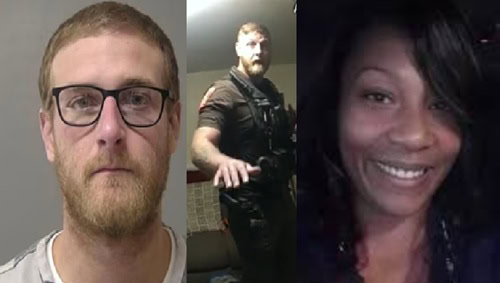
SPRINGFIELD, Ill. — A former Sangamon County sheriff’s deputy was sentenced to 20 years in prison on Thursday for the fatal shooting of Sonya Massey, a 36-year-old woman who called 911 for help from her Springfield home in July 2024.
The sentence was handed down after a jury convicted Sean Grayson, 31, in October 2025 of second-degree murder, finding that he unlawfully used deadly force while responding to Massey’s emergency call. The 20-year sentence represents the maximum punishment allowed under the second-degree murder conviction.
The incident began on the evening of July 6, 2024, when Massey called 911 reporting a possible intruder outside her home. The call, later released during the trial, showed a woman who appeared distressed, confused, and fearful. She told the dispatcher she believed someone was outside her house and that she needed immediate help.
Deputies from the Sangamon County Sheriff’s Office responded to the call. Among them was Sean Grayson, a deputy with the department at the time.
Body-camera footage played in court showed Massey inside her home holding a pot of hot water. The footage captured a brief encounter between Massey and Grayson. The situation escalated quickly, ending with Grayson firing a single shot into Massey’s face. She was pronounced dead at the scene.
The footage and testimony during the trial suggested that Massey was not armed and was not posing an immediate threat when the shooting occurred. Prosecutors argued that Grayson used excessive force and did not properly assess the situation before firing.
The case drew national attention, in part because Massey was a Black woman who had called police for help. The incident raised concerns about how law enforcement responds to people experiencing mental health crises and whether officers are adequately trained to handle such situations without using deadly force.
During the trial, prosecutors argued that Grayson acted recklessly and that his use of force was unjustified. They argued that he did not attempt to de-escalate the situation or use non-lethal methods before firing.
Grayson’s defense team argued that he acted out of fear for his safety, claiming he believed Massey posed a threat. The defense highlighted the fast-moving nature of the encounter and argued that Grayson had to make a split-second decision.
However, the jury ultimately rejected the defense’s argument and found Grayson guilty of second-degree murder. The conviction indicated that the jury believed Grayson’s actions were unlawful, but that he may have believed he was in danger — a key factor in the lesser charge.
At the sentencing hearing, family members delivered emotional statements describing Massey as a loving mother, daughter, and sister who struggled with mental health issues.
Massey’s family said she had called for help because she was frightened and confused, and they argued that officers should have treated the situation as a mental health emergency rather than a threat.
“I lost my daughter that night,” one family member said in court. “She didn’t deserve to die like that. She called for help, and she got killed.”
Grayson also spoke during the hearing, expressing remorse and saying he wished he could “take back” what happened. He said he regretted the decision to fire his weapon and acknowledged that he made mistakes that night.
The judge, while acknowledging the tragedy, said that the maximum sentence under the conviction was appropriate given the circumstances and the jury’s verdict.
The case sparked widespread outrage and protest in Springfield and beyond. Community activists and civil rights groups criticized the handling of the call and argued that the shooting reflected broader problems in law enforcement’s response to mental health crises.
Many advocates called for improved training for officers in de-escalation tactics and mental health intervention. Others demanded changes to police accountability systems and greater transparency when officers use deadly force.
The case also drew attention to how law enforcement agencies handle calls involving people in crisis, especially those involving people of color. Critics argued that the case highlighted a pattern of police using excessive force in situations where a more measured response could have saved a life.
In the months following the shooting, Massey’s family reached a $10 million settlement with Sangamon County. The settlement was part of a civil lawsuit filed by the family, alleging wrongful death and excessive use of force.
The settlement was seen by some as a recognition of wrongdoing by the county, though it did not carry criminal implications.
The case remains a focal point in discussions about police reform in Illinois, particularly regarding how officers respond to mental health emergencies. The sentencing has renewed calls for stronger policies, better training, and greater accountability when officers use deadly force.
Grayson’s sentencing marks the conclusion of a high-profile case that drew national attention and sparked debate about policing practices. The family and community activists say they will continue pushing for reforms to prevent similar tragedies.
For many, the case remains a reminder of the risks faced by individuals in crisis and the need for law enforcement to respond with care, empathy, and appropriate training.
Video Credit ABC7 Chicago